
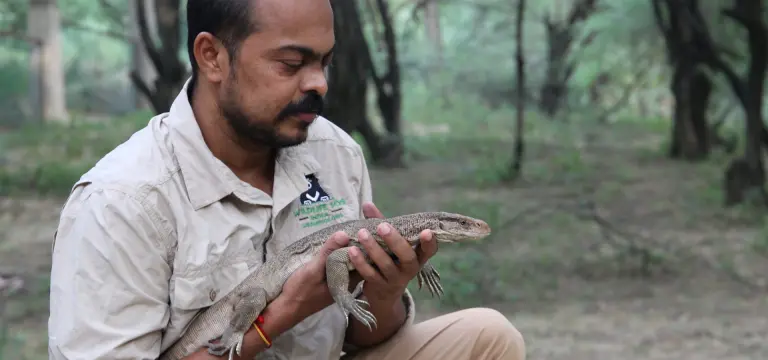
Wildlife Biologist
STREAM
- Science
- Environmental/Earth Sciences
REQUIRED INTELLIGENCES
- Naturalistic
- Logical
- Intrapersonal
ELIGIBILITY
- For 10th: Completion of 10th grade.
- For 12th: Completion of 12th grade with any stream (Science, Commerce, Arts).
- Graduate Studies: A bachelor’s degree in wildlife biology, zoology, ecology, environmental science, or related fields. Advanced degrees (Master’s or Ph.D.) are typically required for research and senior positions.
ENTRANCE TESTS
- Entrance exams may be required for admission to relevant bachelor’s or master’s programs, depending on the educational institution.
- Advanced research positions and certain roles in academia may require qualifying exams such as GRE (Graduate Record Examination) or equivalent.
AVAILABLE COURSES
- Bachelor’s degree in Wildlife Biology, Zoology, Ecology, Environmental Science, or related fields.
- Master’s degree (M.Sc., M.E., or equivalent) specializing in Wildlife Conservation, Conservation Biology, or Wildlife Management.
- Continued professional development through certifications such as Certified Wildlife Biologist (CWB) or Wildlife Society Certified Wildlife Biologist (CWb).
WORK OPPORTUNITIES
- Government agencies (e.g., National Park Service): Conducting research, managing wildlife populations, and implementing conservation programs.
- Non-profit organizations (e.g., World Wildlife Fund, Wildlife Conservation Society): Leading wildlife conservation projects, conducting field surveys, and advocating for wildlife protection.
- Academic institutions: Teaching, conducting research, and publishing findings in wildlife biology journals.
- Consulting firms: Providing expertise in environmental impact assessments, habitat restoration, and wildlife management plans.
- Private sector (e.g., environmental consulting firms, wildlife rehabilitation centers): Contributing to wildlife management, environmental compliance, and conservation education.