
Astronaut
ELIGIBILITY
- For 10th: Completion of 10th grade with a strong foundation in Mathematics, Physics, and Science.
- For 12th: Completion of 12th grade with Physics, Mathematics, and Chemistry as subjects (typically required for admission to engineering or science programs).
- Graduate Studies: A bachelor’s degree in engineering, physical sciences, biological sciences, or mathematics is generally required. Advanced degrees (Master’s or Ph.D.) may be advantageous for astronaut selection.
ENTRANCE TESTS
- Selection as an astronaut typically involves rigorous screening processes conducted by space agencies such as NASA (National Aeronautics and Space Administration), ESA (European Space Agency), or ISRO (Indian Space Research Organisation).
- Tests include assessments of physical fitness, psychological suitability, cognitive abilities, and technical knowledge.
- Astronaut candidates undergo extensive training that includes simulations, underwater training (neutral buoyancy), survival training, and exposure to microgravity conditions.
- Training focuses on spacecraft operations, spacewalks, scientific experiments, emergency procedures, and international collaboration.
AVAILABLE COURSES
- Bachelor’s degree in Aerospace Engineering, Mechanical Engineering, Electrical Engineering, Physics, Astronomy, Biology, or Mathematics.
- Master’s degree (M.Sc., M.E., or equivalent) specializing in Aerospace Engineering, Space Science, Planetary Science, Astrophysics, or related fields.
- Continued professional development through certifications specific to astronaut training and space mission operations.
WORK OPPORTUNITIES
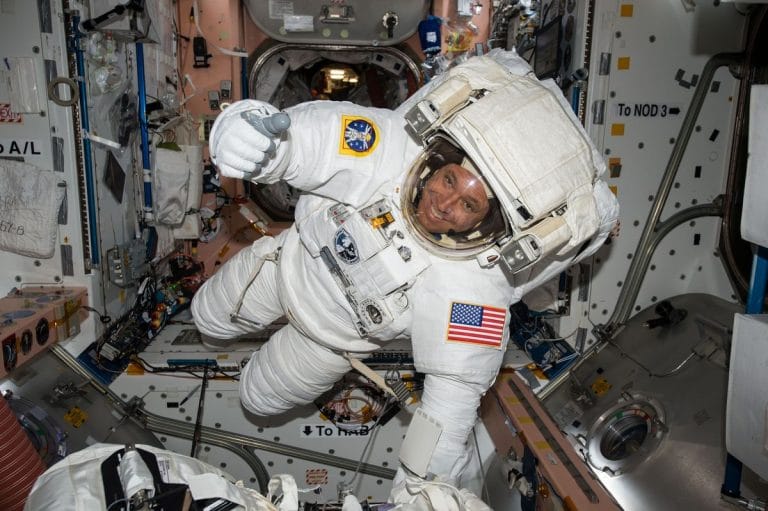
- Space missions: Participating in space missions aboard spacecraft such as the International Space Station (ISS), conducting experiments in microgravity, and contributing to scientific discoveries.
- Research and development: Collaborating with scientists and engineers to develop new technologies for space exploration and advancing knowledge in fields such as astronomy, physics, and biology.
- Education and public outreach: Inspiring future generations through outreach activities, educational programs, and media engagements to promote space exploration and scientific discovery.
- Space agencies and aerospace industry: Working in roles related to space mission planning, spacecraft design, astronaut training, and mission control operations.