
Unleash your unique talents and strengths with our comprehensive self-assessment program.
Pratibimba- See Yourself!
Introducing Pratibimba - See Yourself!
Discover Your True Potential
The Pratibimba Self Assessment test aims to provide insights into an individual’s multiple intelligence levels, learning styles, and potential career options. The test can help individuals, particularly students aged 10 to 18, in selecting the right career path and in personal and professional development. The test results can also help in understanding one’s strengths and weaknesses, thereby providing a roadmap for self-improvement and growth. The test is based on the Multiple Intelligence theory of Dr. Howard Gardner & learning style theory of Neil Fleming and is questionnaire-based, making it a comprehensive and reliable tool for self-assessment.
Unlock Your Potential with a Personalized Analysis
Pratibimba- See Yourself! Test Benefits
A powerful tool that can help anyone gain insight into their strengths and areas for improvement. By taking the test, you’ll receive a personalized analysis that can help you better understand yourself and unlock your potential.
Career Awareness: The test results can help students understand their natural abilities and identify potential career paths that align with their multiple intelligences.
Self-Discovery: The test provides an opportunity for students to learn more about themselves and their unique combination of intelligences.
Improved Study Habits: By understanding their strengths and weaknesses, students can tailor their study habits to maximize their learning potential.
Increased Confidence: The results of the test can help students build confidence in their abilities and feel more self-assured in their personal and academic pursuits.
Better Understanding of Others: The test results can help students understand and appreciate the strengths and weaknesses of their peers, leading to better relationships and teamwork.
Encouragement to Pursue Interests: By identifying their natural abilities, students may be encouraged to explore and pursue their interests, leading to greater passion and motivation in their lives.
Identifying Weaknesses: The test results can help students identify areas that need improvement, allowing them to focus on developing those skills.
Personal Growth: The self-assessment provides an opportunity for students to reflect on their progress and set goals for personal growth and development.
Teacher Support: Teachers can use the results of the test to provide individualized support and instruction to students, helping them reach their full potential.
Preparation for the Future: The test results can help students make informed decisions about their future academic and career plans, leading to a more fulfilling and successful life.
Improved Employee Satisfaction: By understanding their employees’ strengths and weaknesses, companies can provide more fulfilling and rewarding work experiences, leading to higher employee satisfaction and retention.
Better Team Dynamics: The test results can help companies create more effective teams by understanding the unique combination of multiple intelligences of each team member.
Improved Employee Performance: By providing employees with tasks that align with their strengths and abilities, companies can improve employee performance and efficiency.
Increased Productivity: By understanding employee strengths and weaknesses, companies can allocate resources and tasks more effectively, leading to increased productivity.
Better Career Development: The test results can provide employees with valuable insights into their strengths and weaknesses, allowing them to make informed decisions about their career development.
Improved Communication: The test results can help companies improve communication by understanding the unique communication styles of each employee.
Improved Employee Retention: By providing employees with meaningful and fulfilling work experiences, companies can reduce turnover and improve employee retention.
Better Talent Management: The test results can help companies identify and develop high-potential employees, leading to better talent management and succession planning.
Better Hiring Decisions: The test results can provide valuable information to companies during the hiring process, allowing them to make better hiring decisions.
Improved Organizational Effectiveness: By understanding the unique combination of multiple intelligences of employees, companies can create more effective and efficient organizations, leading to improved overall performance.
Understanding Their Child: The test results can provide parents with valuable insight into their child’s unique combination of multiple intelligences, helping them understand their child’s strengths and weaknesses.
Improved Parent-Child Communication: By understanding their child’s abilities, parents can have more informed and productive discussions with their child about their future plans and goals.
Supporting Their Child’s Interests: The test results can help parents identify their child’s interests and abilities, allowing them to encourage and support their child’s passions.
Better Academic Planning: By understanding their child’s multiple intelligences, parents can work with teachers to provide a more tailored and effective educational experience for their child.
Encouraging Personal Growth: The test results can help parents identify areas in which their child may need support and guidance, allowing them to provide a more nurturing and supportive environment.
Informed Decision-Making: The test results can help parents make informed decisions about their child’s future academic and career plans, leading to a more fulfilling and successful life for their child.
Improved Relationship: By understanding their child’s unique combination of intelligences, parents can build a stronger, more empathetic relationship with their child.
Improved Self-Esteem: By recognizing and valuing their child’s abilities, parents can help their child develop a stronger sense of self-worth and self-esteem.
Encouraging Responsibility: The test results can help parents encourage their child to take responsibility for their own personal and academic growth, leading to greater independence and success.
Preparing for the Future: The test results can help parents prepare their child for a successful and fulfilling future, by providing them with a better understanding of their child’s strengths and weaknesses.
Personalized Instruction: The test results can provide teachers with valuable information about their students’ multiple intelligences, allowing them to tailor their instruction to meet the unique needs of each student.
Improved Classroom Management: By understanding their students’ strengths and weaknesses, teachers can create a more positive and productive learning environment.
Encouragement of Student Engagement: The test results can help teachers identify students’ passions and interests, encouraging them to participate more actively in the classroom.
Improved Student Outcomes: By providing personalized instruction, teachers can help students reach their full potential, leading to improved academic and personal outcomes.
Better Understanding of Student Needs: The test results can help teachers understand the needs of each student, leading to more effective and efficient instruction.
Improved Teacher-Student Relationships: By understanding their students’ abilities, teachers can build stronger and more supportive relationships with their students.
Collaboration with Parents: The test results can be shared with parents, allowing for more informed and productive conversations about their child’s education.
Improved School Reputation: By providing a comprehensive assessment of students’ abilities, schools can establish a reputation for providing high-quality education and personalized instruction.
Assessment of Program Effectiveness: The test results can be used to assess the effectiveness of educational programs, allowing for continuous improvement and development.
Preparation for the Future: The test results can help schools prepare students for a successful and fulfilling future, by providing them with a better understanding of their strengths and weaknesses.
The Multiple Intelligence Theory
The Multiple Intelligence theory, developed by psychologist Howard Gardner, suggests that intelligence is not just one single, unified entity but rather a collection of several different abilities or intelligences. According to Gardner, there are eight different intelligences that humans possess: linguistic, logical-mathematical, musical, bodily-kinesthetic, spatial, interpersonal, intrapersonal, and naturalistic.
Each person is believed to have different strengths and weaknesses in different areas of intelligence, and the theory posits that a well-rounded education should take into account the individual strengths and weaknesses of each student. For example, a student who excels in spatial intelligence may learn best through visual aids, while another student who is strong in linguistic intelligence may learn best through reading and writing exercises.
The Multiple Intelligence theory has become widely recognized and accepted in the field of education, and is often used as a framework for designing lesson plans and curricula that cater to the unique needs and strengths
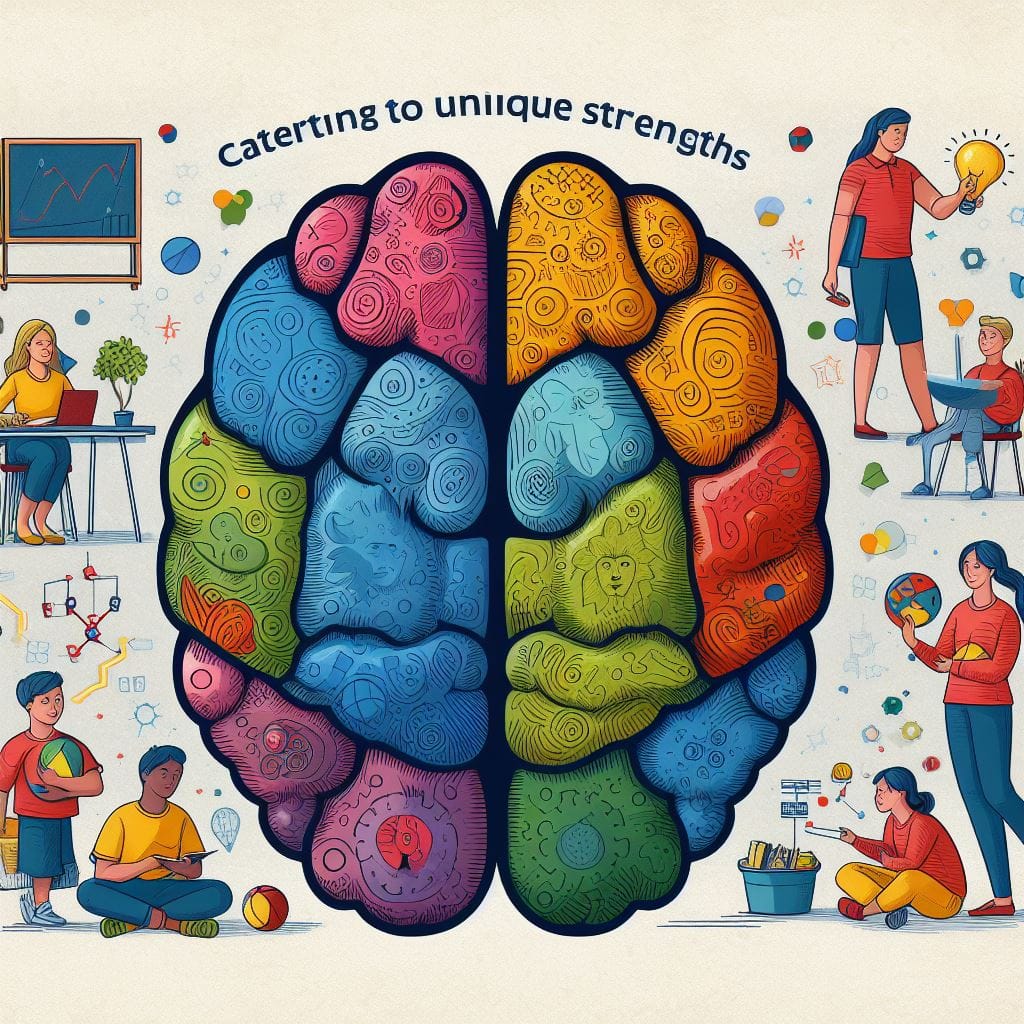
Ability to understand and connect with others’ emotions, feelings, and motivations.
The Learning Style Theory
The learning style theory by Neil Fleming is also known as the “VAK” model, which stands for Visual, Auditory and Kinesthetic. The theory suggests that individuals have preferred learning styles, and that teaching and learning can be optimized by matching the teaching method to the student’s preferred learning style.
The VAK model is widely used in education and training to help identify individuals’ preferred learning styles and tailor the teaching method to their strengths.
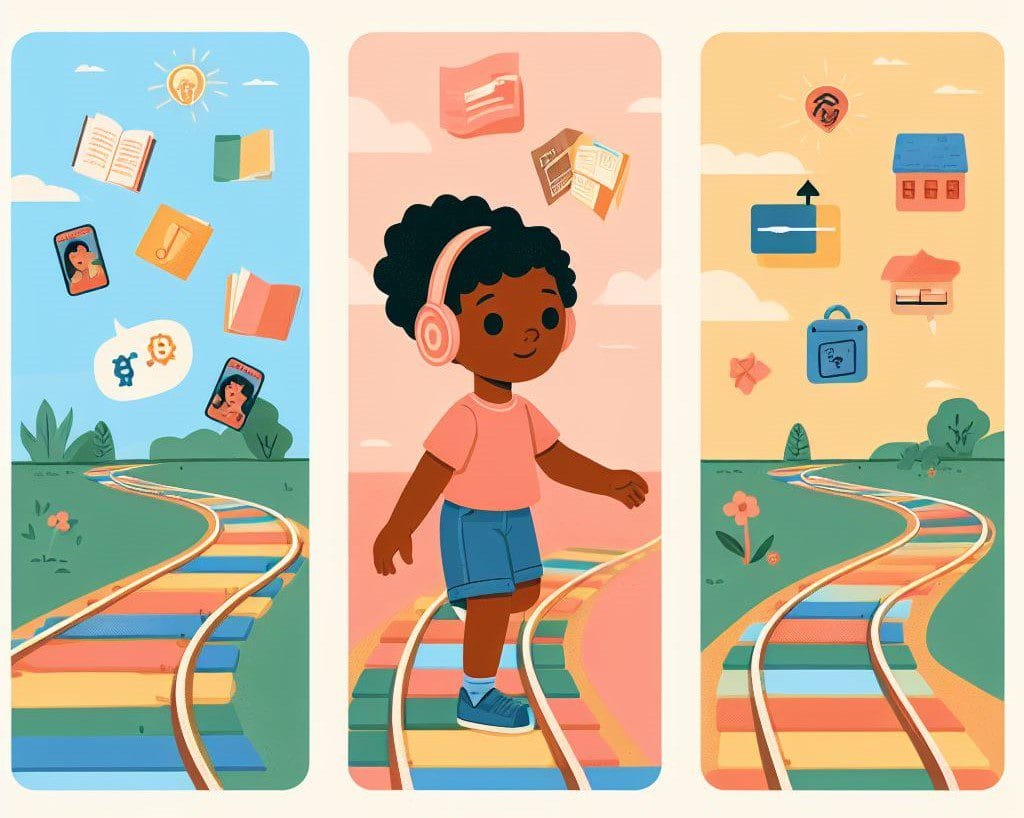
Kinesthetic learners prefer to learn through hands-on activities and physical experiences.
Everything You Need to Know
Test Details
Age group
10 Years and above ( Class 5 & Above)
Questions
Questions based on Personal choices, behavior, habits & preferences.
Answering Method
Multiple Choice and LIKERT scale based options for answers
Process
Multiple Intelligence, Learning style identification & Career assessment is carried out using responses submitted.
Report
Report will be shared within 2 working days on registered email and WhatsApp in PDF format.
Counselling
Report counselling will be scheduled with parents/ guardian for explanation and discussion.
Why Pratibimba- See Yourself! is the Best Choice
Comparison with Other Tests
In comparison to other tests available in the market, Pratibimba- See Yourself! stands out for its comprehensive analysis and personalized approach. Unlike other tests, which only focus on one aspect of the individual, Pratibimba- See Yourself! covers multiple intelligence, learning styles, and career assessment, providing a holistic view of the individual’s potential. With our reassessment option, individuals can track their progress and work on their weak areas, making it a valuable tool for personal and professional growth.
The Dermatoglyphic Multiple Intelligence Test (DMIT) and the Pratibimba Self Assessment Test are both tools designed to assess an individual’s strengths, weaknesses, and potential for success in various areas of life. However, there are some differences between the two tests.
DMIT is based on the theory of dermatoglyphics, which asserts that there is a relationship between an individual’s fingerprints and their inborn abilities and personality traits. The test involves analyzing fingerprints to determine an individual’s innate strengths and weaknesses in areas such as mathematics, language, and spatial intelligence.
On the other hand, the Pratibimba Self Assessment Test is based on the multiple intelligence theory of Howard Gardner, which holds that individuals have a range of intelligences that can be applied in various domains. The test involves answering a questionnaire to determine an individual’s learning style, multiple intelligences, and career preferences.
In conclusion, both the DMIT and Pratibimba Self Assessment Test are designed to help individuals understand their strengths and weaknesses and make informed decisions about their academic and professional paths. However, the DMIT is based on the theory of dermatoglyphics, while the Pratibimba Self Assessment Test is based on the multiple intelligence theory of Howard Gardner.
Psychometric tests and Pratibimba Self Assessment Tests are both methods of evaluating an individual’s abilities and preferences. However, they have different focuses and uses:
Psychometric tests: These tests are designed to assess an individual’s cognitive abilities, such as reasoning, problem-solving, and memory. They are commonly used in the context of employment and recruitment to evaluate an applicant’s suitability for a job.
Pratibimba Self Assessment Test: This test is designed to provide insights into an individual’s learning style, multiple intelligences, and career preferences. It is designed to help individuals understand their strengths and weaknesses, and to guide them in making informed decisions about their academic and professional path.
In conclusion, both psychometric tests and Pratibimba Self Assessment Tests have different focuses and uses. The better test depends on the individual’s specific needs and goals. If an individual is looking for a comprehensive evaluation of their cognitive abilities, a psychometric test may be more suitable. However, if an individual is looking for guidance on their academic and professional path, the Pratibimba Self Assessment Test may be a better option.
Questionnaire-based self-assessment tests are better than traditional SWOT (Strengths, Weaknesses, Opportunities, and Threats) analysis and IQ tests in several ways:
More Comprehensive: Questionnaire-based self-assessment tests are more comprehensive and take into account multiple intelligences, learning styles, personality traits, and other factors, whereas SWOT analysis only focuses on strengths and weaknesses.
Personalized Feedback: Self-assessment tests provide personalized feedback and recommendations, whereas SWOT analysis is typically a self-reflection exercise with no specific guidance or recommendations.
Improved Self-Awareness: Questionnaire-based self-assessment tests help individuals better understand themselves and their strengths, weaknesses, and potential, leading to improved self-awareness and self-esteem.
Better Career Planning: By understanding their strengths and weaknesses, individuals can make informed decisions about their career paths, leading to more fulfilling and successful careers.
Increased Understanding of Others: Self-assessment tests can help individuals understand the strengths and weaknesses of others, improving communication and collaboration.
More Holistic Approach: Self-assessment tests take into account multiple factors that contribute to overall success and well-being, whereas IQ tests only focus on cognitive abilities.
Easy to Administer: Self-assessment tests can be easily administered online, making them accessible to individuals worldwide, whereas IQ tests may require in-person administration.
In conclusion, questionnaire-based self-assessment tests offer a more comprehensive, personalized, and holistic approach to self-reflection and self-improvement than traditional SWOT analysis and IQ tests.
Affordable Pricing for Everyone
Our Pratibimba- See Yourself! test is priced affordably for everyone. We believe that every individual should have the opportunity to unlock their potential, and we strive to make our services accessible to all. Our charges include the cost of the test, personalized analysis, and counseling session with our experts.
Charges:
₹ 500
Frequently Asked Questions
Pratibimba Self Assessment Test is a questionnaire-based test that provides insights into a person’s learning style, multiple intelligence levels, and career options.
The test is designed for people aged 10 years and above.
The time required to complete the test may vary, but it is estimated to take around 30-60 minutes.
The test consists of a series of questions that help determine a person’s learning style, multiple intelligence levels, and career options. The results are based on the answers given in the questionnaire.
The test provides insights into a person’s strengths and weaknesses, which can help with career selection and development. It also helps identify areas for improvement and provide guidance on how to develop skills and talents.
Yes, the results of the test can change over time as a person’s interests, skills, and abilities change and develop.
The reliability of the test depends on the accuracy of the answers provided in the questionnaire. It is important to answer the questions honestly and to the best of one’s ability.
The cost of the test is ₹ 499.
The Pratibimba Self Assessment Test is different from IQ tests and psychometric tests in that it provides insights into a person’s learning style, multiple intelligence levels, and career options, rather than just measuring intelligence or cognitive abilities.
Yes, the test can be used for people with autism or slow learners as it provides insights into their strengths and weaknesses, which can help with their development and career selection.
Need Help? Check Our Queries Section
Find Solutions to Your Queries
Pratibimba See Yourself ! Test: Questions and Interpretations
Learning Style Identification What kind of book would you like to read for fun? This question aims to identify the student’s preference in terms of
How the Pratibimba- See yourself! test reports are generated?
The Pratibimba self-assessment test generates reports based on the responses provided by the individual taking the test. The test is designed to measure various aspects
How Pratibimba- See Yourself! test can create a healthy society and influence mental health in a good manner?
The Pratibimba self-assessment test can have a positive impact on society and mental health by providing individuals with a greater understanding of their strengths, weaknesses,
How Pratibimba- See Yourself! test will reduce the stress and exam/ test & future anxiety
The Pratibimba Self Assessment Test can help reduce stress and anxiety by providing individuals with a better understanding of their learning styles, multiple intelligences, and
Is multiple intelligence theory being used for students worldwide?
The multiple intelligence theory of Howard Gardner is widely recognized and used globally in education and career development. The theory has been applied in schools,
What are the scientific bases for Pratibimba- See Yourself! test?
The Pratibimba Self Assessment Test is based on the multiple intelligence theory of Howard Gardner, which holds that individuals have a range of intelligences that