
Multiple Intelligence Theory
What is Multiple Intelligence theory ?
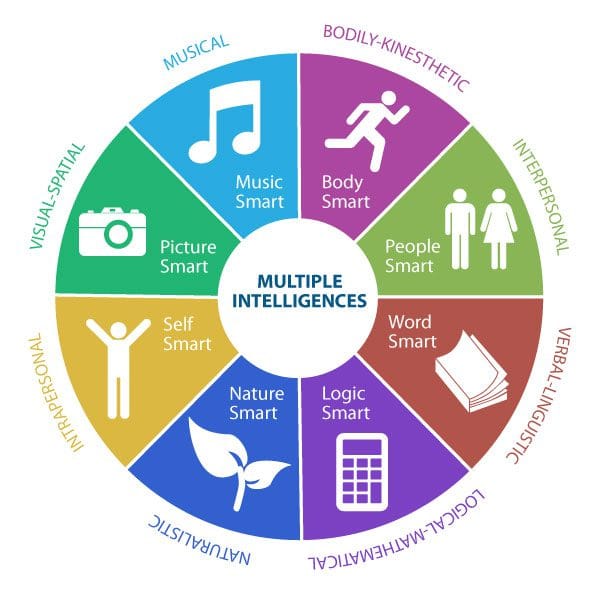
The theory of multiple intelligences was first proposed by psychologist Howard Gardner in 1983. It suggests that intelligence is not a single, unitary trait, but rather a collection of multiple, distinct abilities that operate in parallel and interact with each other. According to Gardner, there are at least nine different types of intelligence: linguistic, logical-mathematical, musical, spatial, bodily-kinesthetic, naturalistic, interpersonal, intrapersonal, and existential. Each person has a unique profile of strengths and weaknesses across these intelligences, and traditional measures of intelligence (such as IQ tests) fail to capture this diversity.
Need of Multiple Intelligence Assessment
Traditional Education Systems are Limited
Traditional education systems often rely on a single definition of intelligence, typically based on linguistic and logical-mathematical abilities, which neglects the diverse range of abilities and strengths that individuals possess.
Fosters Inclusivity
By recognizing and valuing the different types of intelligence, multiple intelligence assessment can create a more inclusive and diverse learning environment where all individuals can feel valued and appreciated for their unique strengths.
Improves Teaching and Learning
By understanding the multiple intelligences of their students or employees, educators and trainers can design lessons and training programs that tap into a range of abilities and learning styles, making the learning experience more engaging and effective.
Supports Personal Growth
Understanding one’s own strengths and weaknesses across different intelligences can help individuals identify areas for personal growth and improvement, and provide a framework for developing new skills and abilities.
Better Assessment of Ability
Multiple intelligence theory provides a more nuanced understanding of individual abilities, leading to more appropriate and effective assessment strategies that can better reflect individuals’ true potential.
Improved Career Guidance
By providing insight into individuals’ strengths and weaknesses across different intelligences, multiple intelligence assessment can be useful in choosing a career path that aligns with their natural abilities.
Benefits of Multiple Intelligence assessment
Improved Self-Awareness: Understanding one’s own strengths and weaknesses across different intelligences can help students develop a better sense of self and increase their self-esteem.
Enhanced Learning: By knowing their preferred learning styles, students can tailor their study strategies to better fit their strengths and maximize their learning potential.
Increased Motivation: When students are taught in a way that capitalizes on their strengths, they are more likely to be engaged and motivated in the learning process.
Better Study Skills: Knowing their preferred learning style can help students develop better study skills, including time management, note-taking, and test preparation.
Career Guidance: Multiple intelligence assessment can provide insight into students’ strengths and weaknesses, which can be useful in choosing a career path that aligns with their natural abilities.
Personal Growth: Understanding their multiple intelligences can help students identify areas for personal growth and improvement, and provide a framework for developing new skills and abilities.
Improved Teaching: By understanding the multiple intelligences of their students, teachers can design lessons that tap into a range of abilities and learning styles, making the learning experience more engaging and effective.
Enhanced Curriculum Development: By incorporating the multiple intelligences into the curriculum, schools can create a more comprehensive and well-rounded educational experience that better meets the needs of all students.
Differentiated Instruction: Multiple intelligence assessment can help teachers tailor their instruction to meet the needs of individual students and support their unique strengths and weaknesses.
Increased Student Engagement: When students are taught in a way that speaks to their preferred learning style, they are more likely to be engaged and motivated in the learning process.
Better Assessment: Multiple intelligence theory provides a more nuanced understanding of student abilities, leading to more appropriate and effective assessment strategies that can better reflect students’ true potential.
Inclusivity: By recognizing and valuing the different types of intelligence, schools can create a more inclusive and diverse learning environment where all students can feel valued and appreciated for their unique strengths.
Improved Reputation: By incorporating multiple intelligence assessment into their educational practices, schools can demonstrate a commitment to meeting the diverse needs of their students, which can improve their reputation and attract more families to enroll their children.
Improved Hiring and Recruitment: By incorporating multiple intelligence assessment into their hiring process, corporations can identify potential employees who have a well-rounded set of abilities and strengths, and not just those who excel in specific areas.
Improved Team Dynamics: By understanding the multiple intelligences of their employees, corporations can create teams that have a balance of different strengths and abilities, leading to a more collaborative and effective work environment.
Improved Employee Retention: When employees feel valued and appreciated for their unique strengths and abilities, they are more likely to be satisfied with their work and stay with the company for a longer period.
Better Employee Development: By understanding the strengths and weaknesses of their employees across different intelligences, corporations can provide tailored training and development opportunities that support their employees’ growth and improve their performance.
Improved Customer Service: By understanding the preferred communication and learning styles of their customers, corporations can provide more personalized and effective customer service that meets the needs of their customers.
Improved Workplace Culture: By valuing and appreciating the diverse strengths and abilities of their employees, corporations can create a more inclusive and diverse workplace culture, which can lead to improved morale and job satisfaction.
Insight into Multiple Intelligences

Math Smart – Logical intelligence
This involves having the ability to think critically. Such people have a scientific aptitude and are good with numbers and abstract problems.

Vision Smart – Visual Intelligence
Visual intelligence is related to one’s ability to manipulate and use visual or mental images.

Language Smart – Linguistic intelligence
People who are strong in linguistic-verbal intelligence are able to use words well, both when writing and speaking. These individuals are typically very good at

Self Smart – Intrapersonal intelligence
Being aware of one’s own feelings, emotions, needs, and motives is called having intrapersonal intelligence. So, philosophers and spiritual leaders are high on intrapersonal intelligence.

People Smart – Interpersonal intelligence
Those who have strong interpersonal intelligence are good at understanding and interacting with other people. These individuals are skilled at assessing the emotions, motivations, desires,

Body Smart – kinaesthetic intelligence
Those who have high bodily-kinesthetic intelligence are said to be good at body movement, performing actions, and physical control. People who are strong in this

Nature Smart – Naturalist intelligence
Naturalistic is the most recent addition to Gardner’s theory and has been met with more resistance than his original seven intelligences. According to Gardner, individuals

Music Smart – Musical intelligence
People who have strong musical intelligence are good at thinking in patterns, rhythms, and sounds. They have a strong appreciation for music and are often
